Machine generated contents note: Introduction; 1. Historiography and popular understandings; 2. 'Ghetto': the source of the term and the phenomenon in the early modern era; 3. 'Ghetto' and 'ghettoization' as cultural concepts in the modern age; 4. The Nazis' anti-Jewish policy in the 1930s and the question of Jewish residential districts; 5. First references to the term 'ghetto' in the discourse of the makers of anti-Jewish policies in the Third Reich (1933-1938); 6. The semantic turning point in the meaning of 'ghetto': Peter-Heinz Seraphim and Das Judentum in osteuropa;ischen Raum (1938); 7. The invasion of Poland and the emergence of the 'classic' ghettos; 8. Methodological interlude: the term 'ghettoization' and its use during the Holocaust itself and later scholarship; 9. Would the idea spread to other places? Amsterdam 1941, the only attempt to establish a ghetto west of Poland; 10. Ghettos during the final solution, 1941-1943: the territories occupied in Operation Barbarossa; 11. Ghettos during the final solution outside the occupied Soviet Union: Poland, Theresienstadt, Amsterdam, Transnistria, Salonika and Hungary; Summary and conclusion.
OBNB doesn't sell books, but you may be able to find a copy at one of these websites:


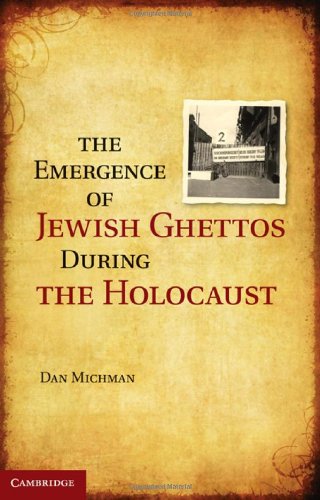
The emergence of Jewish ghettos during the Holocaust by Dan Mikhman. ISBN 9780521763714. Published by Cambridge University Press in 2011. Publication and catalogue information, links to buy online and reader comments.